Why Slowing Down Your Workouts Can Help You Get Stronger (and Pain-Free)
Why Slowing Down Your Workouts Can Help You Get Stronger (and Pain-Free)
Most people think the answer to pain in the gym is to push through it or “just stretch more.”
But if you’ve ever felt a nagging pain during squats, deadlifts, or shoulder exercises, your body is trying to tell you something, and ignoring it can lead to bigger problems.
Here’s the truth:
Sometimes the fastest way to get stronger… is to slow down.
Pain Isn’t a Sign to Push Harder
If an exercise hurts, the worst thing you can do is keep hammering away at it.
Pain is often a signal that something in your movement pattern is off. When your form or biomechanics aren’t optimal, your body starts compensating, placing excess stress on joints, tendons, or muscles that aren’t meant to handle that load.
Over time, this leads to:
Chronic pain
Decreased performance
Increased risk of injury
Instead of building strength, you’re reinforcing dysfunction.
Why Lighter Weights and Lower Reps Work
It might feel counterintuitive, but reducing the weight and slowing down your reps is often the key to long-term progress.
When you scale things back, you give yourself the opportunity to:
Focus on proper movement patterns
Improve muscle activation
Build stability and control
Reduce unnecessary strain on your body
This is where real strength is built, not just how much weight you can move, but how well you can move it.
Better Form = Better Strength
Strength isn’t just about force, it’s about efficiency.
When your biomechanics are dialed in:
You recruit the right muscles at the right time
You generate more power with less effort
You reduce wear and tear on your joints
You unlock higher performance potential
That’s how you go from working out in pain… to hitting PRs confidently.
Don’t Reinforce the Problem
One of the biggest mistakes we see is people continuing to train through painful movements.
For example:
Pushing through shoulder pain in overhead presses
Ignoring knee pain during squats
Fighting through back discomfort in deadlifts
Every rep performed with poor mechanics reinforces the issue.
You’re not just working out, you’re practicing a pattern.
Make sure it’s the right one.
How to Fix It
If something hurts, here’s a better approach:
Modify the movement
Adjust range of motion, stance, or position.
Reduce the load
Use lighter weights to regain control.
Slow it down
Focus on tempo and intentional movement.
Dial in your form
Pay attention to alignment, control, and muscle engagement.
Get expert guidance
A trained eye can quickly identify what’s off and how to fix it.
How We Help at Advanced Physical Therapy & Wellness
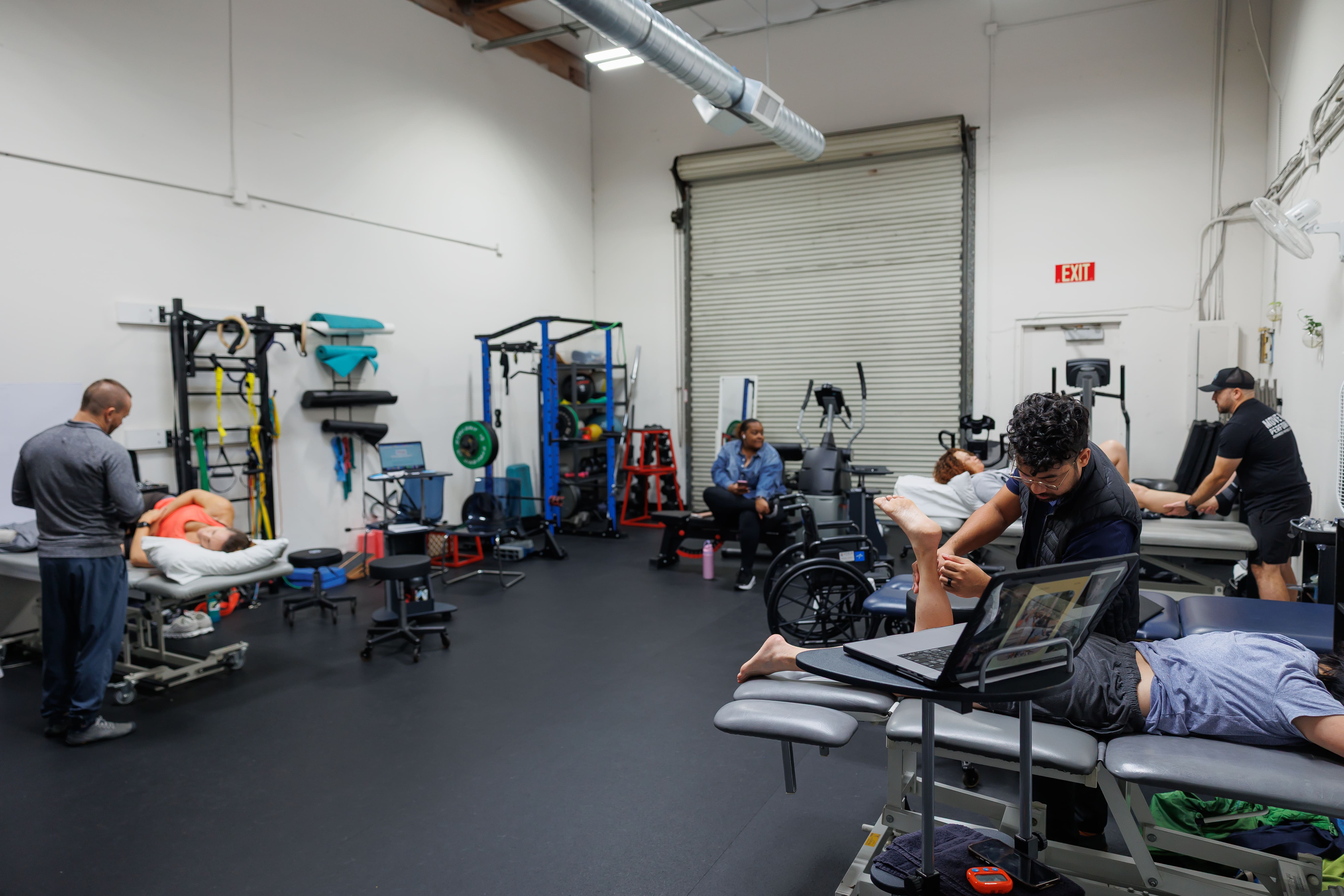
At Advanced Physical Therapy & Wellness, we specialize in helping active individuals move better, feel better, and perform at a higher level.
Whether you’re working with one of our Doctors of Physical Therapy or our in-house personal trainer, we focus on:
Identifying movement breakdowns
Improving biomechanics
Rebuilding strength the right way
Our goal isn’t just to get you out of pain, it’s to help you come back stronger than before.
The Bottom Line
If an exercise is causing pain, don’t ignore it, and don’t push through it.
Slow down. Fix your form. Build a better foundation.
That’s how you stay consistent, avoid injuries, and ultimately hit those PRs you’re chasing.
Ready to Move Better?
If you’re dealing with pain during workouts or feel like something is “off,” we can help.
👉 Click below to learn more about our complimentary Targeted Relief Sessions and reserve your spot.