Sports Injury Rehabilitation in San Diego | Knee, Hip, Shoulder & More
Sports Injury Rehabilitation: Knee, Hip, Shoulder, Back & Neck Rehabilitation
Whether you're a competitive athlete, weekend warrior, or simply someone who refuses to let pain slow you down, an injury can be frustrating.
Maybe your knee started hurting while running. Maybe your shoulder bothers you when you lift weights. Perhaps your hip has gradually become tighter, your low back hurts after golf, or your neck is constantly stiff after working at a desk.
Whatever the problem, one thing is important to understand:
The area that hurts isn't always the area that caused the problem.
That's why effective sports injury rehabilitation should look at more than just the painful body part.
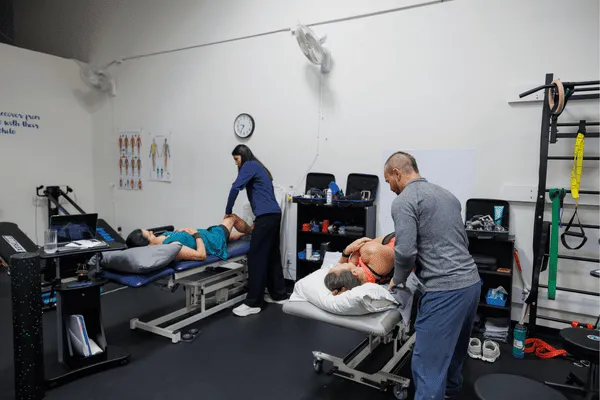
At Advanced Physical Therapy & Wellness in San Diego, we take a whole-body approach to physical therapy. Rather than simply treating your knee, hip, shoulder, back, or neck, we look at how your entire body moves and functions to identify the factors contributing to your injury.
Our goal isn't simply to make your pain go away.
Our goal is to help you get back to doing what you love and stay there.
What Is Sports Injury Rehabilitation?
Sports injury rehabilitation is the process of helping an athlete or active individual recover from an injury, rebuild strength and mobility, and safely return to the activities they enjoy.
Rehabilitation isn't just for professional athletes.
It can benefit anyone who wants to stay active, including runners, golfers, pickleball players, hikers, weightlifters, cyclists, fitness enthusiasts, and active adults.
Depending on the injury and your goals, rehabilitation may address:
Pain and inflammation
Joint mobility
Muscle strength
Balance and stability
Flexibility
Coordination
Movement mechanics
Endurance
Sport-specific movements
Training load
Injury prevention
The goal isn't simply to get you through your day without pain.
It's to help you confidently return to the activities that matter to you.
Why Whole-Body Sports Injury Rehabilitation Matters?
Your body doesn't work as a collection of independent parts.
Your hip affects your knee.
Your ankle affects your knee and hip.
Your core affects your back.
Your shoulder blade affects how your shoulder moves.
Your thoracic spine affects your shoulder and neck.
And your foot, ankle, hip, and trunk can all influence the way forces move through your body when you run, jump, lift, or change direction.
That's why simply treating the location of your pain may not always address the reason the problem developed.
For example, someone with knee pain may actually have limitations at their ankle or hip that are changing how they load their knee.
Someone with shoulder pain may have limited mobility through their thoracic spine or poor control of their shoulder blade.
Someone with low back pain may have mobility or strength limitations elsewhere in their body that are changing how their spine handles movement.
This is why we don't just ask:
"Where does it hurt?"
We also ask:
"Why is it hurting?"
Knee Rehabilitation
Knee injuries are some of the most common problems we see in active individuals.
Knee rehabilitation may be appropriate for injuries and conditions including:
ACL injuries
Meniscus injuries
Patellofemoral pain
Tendon injuries
Knee arthritis
Ligament injuries
Running-related knee pain
Sports-related knee injuries
Knee pain following surgery
Effective knee rehabilitation isn't simply about strengthening the muscles around your knee.
We also want to understand how your entire lower body is functioning.
How does your ankle move?
Do you have adequate hip mobility?
Can you control your knee when you squat, land, run, or change direction?
Do you have the strength and endurance necessary for your sport?
And are you progressing your training load appropriately?
By answering these questions, we can build a rehabilitation program that addresses more than just your symptoms.
Getting Back to Your Sport After a Knee Injury
Being able to walk without pain doesn't necessarily mean you're ready to return to your sport.
Running, jumping, cutting, pivoting, and changing direction place significantly different demands on your body.
A successful knee rehabilitation program should progressively prepare you for those demands.
The goal is to move from basic mobility and strength toward increasingly dynamic and sport-specific movements so that you're not only feeling better, you're actually prepared for the activity you want to return to.
Hip Rehabilitation
Your hips are central to almost everything you do.
Running, walking, squatting, golfing, climbing stairs, changing direction, and even maintaining good posture all require your hips to move and produce force effectively.
Hip problems can develop from an acute sports injury or gradually over time.
Common reasons someone may benefit from hip rehabilitation include:
Hip pain
Muscle strains
Hip impingement
Tendon injuries
Hip arthritis
Running-related injuries
Groin pain
Post-surgical rehabilitation
Limited hip mobility
One of the biggest mistakes we see is assuming that hip pain automatically means the hip itself is the entire problem.
Your hip interacts with your pelvis, spine, knee, and ankle.
That's why evaluating the entire movement chain can provide valuable information about what's contributing to your symptoms.
A strong hip isn't just about how much weight you can lift.
It's about how well you can control and use that strength when you move.
Shoulder Rehabilitation
The shoulder is one of the most mobile joints in the body—and that mobility also makes it particularly dependent on strength and stability.
Shoulder rehabilitation may be appropriate for:
Rotator cuff injuries
Shoulder impingement
Tendon problems
Labral injuries
Shoulder instability
Shoulder pain with lifting
Overhead sports injuries
Post-surgical rehabilitation
Repetitive-use injuries
But the shoulder doesn't function alone.
Your shoulder blade, thoracic spine, neck, and even your core all contribute to healthy shoulder movement.
For example, someone may experience shoulder pain when lifting overhead because they don't have adequate mobility or control somewhere else in the system.
That's why our approach to shoulder rehabilitation goes beyond simply strengthening the rotator cuff.
We look at how your entire upper body moves.
Low Back Rehabilitation
Low back pain is one of the most common reasons people stop exercising and participating in the activities they enjoy.
But experiencing low back pain doesn't necessarily mean you need to stop moving.
In fact, appropriate movement and progressive strengthening can be an important part of recovery for many people.
Low back rehabilitation may address:
Mobility
Core strength
Hip strength
Spinal movement
Movement mechanics
Lifting mechanics
Balance
Endurance
Activity tolerance
Most importantly, we want to understand what your back is being asked to do.
If you experience back pain when golfing, running, lifting, or exercising, we want to know what happens during those activities not just what happens while you're lying on a treatment table.
Our goal is to help your body become capable of handling the activities you want to do.
Neck Rehabilitation
Neck pain can make almost everything more difficult.
Turning your head while driving, working at a computer, exercising, sleeping, or simply getting through your day can become uncomfortable.
Neck rehabilitation may be helpful for:
Neck pain
Muscle tension
Mobility limitations
Headaches associated with the neck
Sports-related neck injuries
Postural issues
Whiplash
Persistent stiffness
But just like the other areas of the body, the neck doesn't exist in isolation.
Your upper back, shoulders, breathing mechanics, posture, and movement patterns can all influence how your neck functions.
That's why effective neck rehabilitation may involve more than simply stretching the neck or working on the muscles directly around it.
What Does a Sports Injury Rehabilitation Program Look Like?
Every person and every injury is different.
That's why we don't believe in handing everyone the same list of exercises.
Your rehabilitation program should be based on:
Your injury.
Your movement.
Your goals.
Your lifestyle.
Your sport.
Your current capabilities.
A comprehensive evaluation helps identify where you're starting and what needs to change.
From there, rehabilitation may progress through several stages.
1. Understand the Problem
We begin by determining what is contributing to your symptoms and how your body is currently moving.
2. Restore Mobility
Restrictions in mobility can affect how your body moves and distributes forces.
3. Build Strength
Your muscles and tissues need to develop the capacity to handle the demands you're placing on them.
4. Improve Movement
We progressively challenge your ability to control your body during increasingly complex movements.
5. Return to Your Activity
Finally, rehabilitation should become specific to what you actually want to do.
If you're a runner, that might mean running.
If you're a golfer, it might mean rotational movements and eventually a full round of golf.
If you're a pickleball player, it may mean lateral movement, quick changes of direction, and repeated acceleration and deceleration.
Rehabilitation should prepare you for real life, not just the physical therapy clinic.
Pain-Free Isn't Always the Same as Ready
One of the biggest mistakes people make after an injury is assuming that being pain-free means they're ready to return to full activity.
Those are two different things.
You may be able to walk without pain but not yet have the strength to run.
You may be able to lift a light weight but not be ready for repetitive overhead movements.
You may be able to perform a basic squat but not be ready to play a competitive pickleball match.
That's why sports injury rehabilitation should progressively increase the demands placed on your body.
We want to build capacity, not simply eliminate symptoms.
Do You Really Need to Rest When You're Injured?
Not necessarily.
There are certainly injuries where activity needs to be temporarily modified, but complete rest isn't always the best solution.
Your body adapts to the demands you place on it.
The key is finding the right amount of movement and loading for your current stage of recovery.
Instead of completely stopping everything you enjoy, rehabilitation can help determine:
What you can safely do right now
What activities should be modified
What needs to temporarily be avoided
How to gradually increase your activity
How to build your body's capacity to handle more
This approach allows you to keep moving whenever it's appropriate while progressively working toward your ultimate goal.
Why Advanced Physical Therapy Is Different
At Advanced Physical Therapy & Wellness, we believe physical therapy should be about more than treating a body part.
If you come to us with knee pain, we'll evaluate your knee.
But we'll also look at your hip, ankle, foot, core, and overall movement.
If you come to us with shoulder pain, we'll evaluate your shoulder, but we'll also look at your shoulder blade, thoracic spine, neck, and movement patterns.
Because sometimes the area that hurts isn't the area that needs the most attention.
That's the philosophy behind our Total Body Diagnostic.
Rather than simply focusing on the joint or body part that hurts, we evaluate how your entire body is functioning so we can identify potential contributors to your symptoms.
It's a more complete approach to physical therapy and one designed for people who don't want to simply feel better.
They want to perform better.
Don't Let an Injury Keep You From Doing What You Love
Whether you're dealing with knee pain, a hip injury, shoulder pain, low back pain, or neck pain, you don't necessarily have to give up the activities you enjoy.
The right sports injury rehabilitation program can help you understand what's contributing to your symptoms, rebuild your strength and mobility, and progressively return to the activities that matter most to you.
At Advanced Physical Therapy & Wellness, we take the time to understand your entire body, not just the location of your pain.
Because our goal isn't simply to get you out of pain.
Our goal is to help you move better, perform better, and stay active for the long term.
If you're ready to get to the root of your injury and get back to doing what you love, schedule a Total Body Diagnostic with Advanced Physical Therapy & Wellness in San Diego.